What happens to your face after you quit smoking?
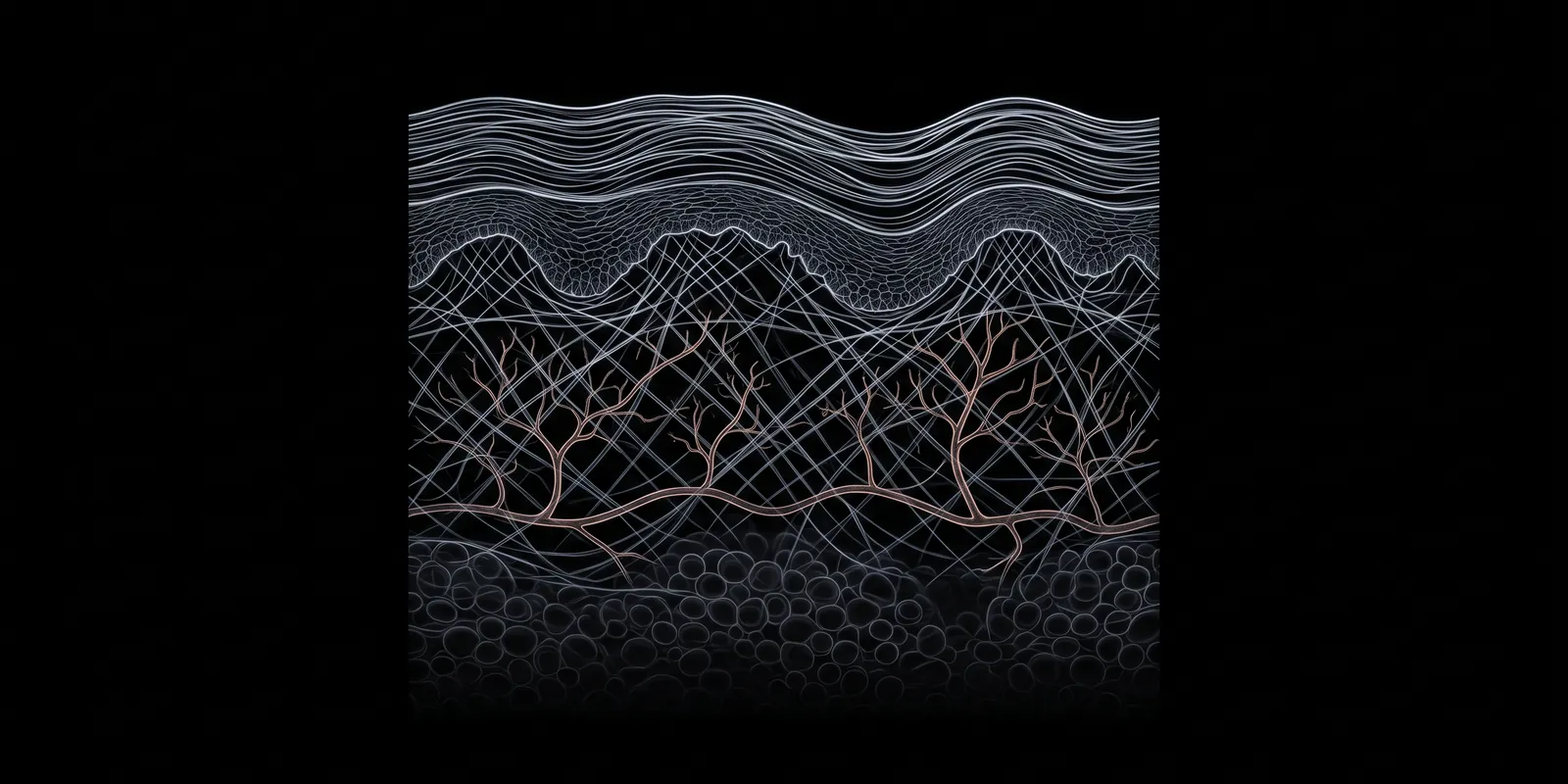
Skin colour changes first, and it is the only change with direct measurements behind it. In a study of 34 men, instrument readings of skin pigment and redness had fallen at every site tested four weeks after quitting; in a study of 84 people, skin became measurably lighter and less red over four to twelve weeks in those who stopped. The repeated drop in skin blood flow and oxygen that follows each cigarette ends with the last one. Collagen recovers more slowly, and no study shows established deep wrinkles reversing. These cessation studies are small, mostly uncontrolled, and none runs longer than nine months. Smokers are two to three times as likely as never-smokers to have moderate or severe facial wrinkling, so the main benefit of stopping is that the damage stops accumulating.
What smoking does to facial skin
The term “smoker’s face” comes from a 1985 British study of 116 clinic patients, in which a doctor could identify 19 of the 41 current cigarette smokers (46%) from their faces alone — by lines and by changes in the colour and quality of the skin. None of the 38 non-smokers met the criteria. A later study of 911 adults aged forty and over put numbers on the wrinkling: after allowing for age, sun exposure and body weight, current smokers were 2.3 times (men) and 3.1 times (women) as likely as never-smokers to have moderate or severe facial wrinkles.
Two mechanisms have reasonable evidence. The first is blood supply. In a small experiment, a single cigarette measurably reduced blood flow and oxygen in the skin and the tissue beneath it; repeat that through the day and the skin spends much of its time under-supplied. The second is structural. Skin biopsies show that smokers carry significantly more of the genetic message for matrix metalloproteinase-1, an enzyme that breaks down collagen — the protein that makes up most of the skin’s deeper layer — and the difference was found in skin that never sees the sun. Smoking also slows the production of new collagen.
The same processes show up in how skin heals. Across 140 studies covering 479,150 surgical patients, smokers had about twice the odds of delayed healing and wound infection, and more than three times the odds of tissue death at the wound edge.
The first weeks: colour and blood supply
A systematic review of the wound-healing literature concluded that tissue oxygen and metabolism are restored rapidly once smoking stops, and that the function of inflammatory cells recovers in part within four weeks. Carbon monoxide, which takes up part of the blood’s oxygen-carrying capacity in smokers, is back in the non-smoker range within about a day. This is the physiology behind the early change people notice.
Two studies have measured colour directly. In South Korea, 34 men who quit without medication had their skin read with a reflectance instrument at seven sites; pigment readings had fallen at most sites within one week, and both pigment and redness readings were lower at every site by four weeks. In Japan, 84 people attending a stop-smoking clinic were followed for twelve weeks: skin lightness rose from week four onward in those who quit, and redness fell, compared with those who did not manage to stop.
Note what was measured. The change was towards lighter, more even and less red skin — not the “rosy glow” of popular accounts. Both studies were small, the Korean one was all male with no proper comparison group, and neither followed anyone beyond three months. A marker of oxidative damage in the skin’s outer layer did not change in the Japanese study.
Months: texture and fine lines, with a large caveat
The study most often quoted here followed 64 women in Milan for nine months through a stop-smoking programme and reported that the “biological age” of their skin fell by an average of about thirteen years, having started about nine years older than their actual age.
That headline deserves caution. The “biological age” was a composite score produced by a proprietary algorithm from readings of smoothness, brightness, colour and elasticity. There was no comparison group, the women were also supported by dermatologists and nutritionists, and the study was part of a public campaign built around the idea that quitting improves appearance. It is evidence that several surface measures move in the right direction over months. It is not evidence that thirteen years of ageing are undone.
A reasonable reading of all three studies together: colour and evenness change within one to three months, surface texture and elasticity may improve over several months, and the size of that improvement is uncertain.
What does not fully reverse
No study has followed quitters long enough, or with enough rigour, to show established deep wrinkles, sagging or lost volume reversing. The biology gives little reason to expect it: the same review that found oxygen supply recovering quickly found that the collagen-building response remained impaired after people stopped, at least over the periods studied.
The 1985 study found “smoker’s face” in only 3 of 37 former smokers (8%), against 46% of current ones. Its author was careful about what that meant — either the appearance faded after stopping, or those people never had it — and said a study following quitters over time would be needed to tell. Forty years on, that study has not been done.
What stopping reliably does is end further smoke-related damage. Wound healing shows the pattern: former smokers have fewer healing complications than current smokers, and still somewhat more than people who never smoked.
Does this apply to vaping?
Partly, and with far less evidence. There are no published studies of wrinkling, skin ageing or skin recovery in people who vape, and none comparing skin before and after stopping. Anyone showing before-and-after claims for vaping is not drawing on research.
What exists concerns blood supply. A 2022 systematic review found that the limited human studies show skin blood flow and oxygen falling after a session with an e-cigarette — notably both with and without nicotine — and that rats exposed to vapour had more tissue death in skin flaps, at rates similar to cigarette smoke. The reviewers describe the evidence as limited and, on the strength of it, advise stopping vaping around the time of surgery.
Vapour does not contain most of the combustion products in cigarette smoke, and vaping delivers far less carbon monoxide than combusted tobacco. That makes it plausible, though unproven, that vaping ages skin less than smoking. Whether it ages skin more than not vaping is unknown.
When to see a doctor
- A sore, ulcer or lump on the lip, in the mouth or on the face that has not healed after three weeks
- White or red patches inside the mouth that do not go away
- A mole or patch of skin that is changing in size, shape or colour, or that bleeds
- A wound that is not healing, or that becomes hot, swollen, increasingly painful or discharges pus
- Sudden drooping of one side of the face, with or without arm weakness or slurred speech — call emergency services
- Blue or grey lips with breathlessness — call emergency services
What 336 does not do
336 shows no before-and-after faces and makes no promise about wrinkles, because the studies do not support one. The app’s 14-day timeline and clearance panel track nicotine and, for smokers, carbon monoxide against published half-lives — estimates from the literature, labelled as such, not readings of your skin. It is cold turkey only, with no nicotine replacement sold or recommended inside it, free for the first 24 hours and then a one-time purchase.
On the quit timeline
Withdrawal symptoms, hour by hour
SIK SORULAN SORULAR
How long after quitting smoking does skin improve?
The earliest measured change is in colour. In one study of 34 men, instrument readings of pigment and redness were lower four weeks after quitting; in another of 84 people, skin became lighter and less red between four and twelve weeks. Texture and elasticity may improve over several months. These studies are small and short, so the timings are approximate.
Will wrinkles go away after I quit smoking?
Established deep wrinkles should not be expected to disappear; no study has shown that. Fine surface lines and texture may improve over months, based on one uncontrolled study of 64 women. The dependable benefit is that smoking-related damage stops accumulating. Current smokers are two to three times as likely as never-smokers to have moderate or severe facial wrinkling.
Is “smoker’s face” reversible?
Partly, as far as anyone knows. Skin colour and blood supply improve within weeks of stopping. The original 1985 study found the appearance in 46% of current smokers and 8% of former smokers, but could not say whether it had faded in those who quit or had never developed. No long-term study has settled the question.
Does vaping cause wrinkles?
It has not been studied. There is no published research on wrinkles or skin ageing in people who vape. Small studies show skin blood flow and oxygen dropping after an e-cigarette session, with and without nicotine, which is one of the routes by which smoking is thought to age skin. Vapour lacks most combustion products, so the effect is probably smaller, but that is inference.
Does skin recover after quitting vaping?
There are no before-and-after studies of skin in people who stop vaping. The short-term effect of each session on skin blood flow ends when the sessions do, and reviewers of the surgical evidence advise stopping around operations for that reason. Any claim of a specific timeline for skin recovery after vaping is borrowed from smoking research, which is itself limited to a few small studies.
Does quitting smoking help wounds heal?
Yes, within limits. Smokers have about twice the odds of delayed healing and wound infection after surgery. In four randomised trials, stop-smoking support begun between two and eight weeks before an operation more than halved the odds of wound infection (odds ratio 0.43, 95% confidence interval 0.21 to 0.85), though it did not clearly reduce other healing problems. Former smokers still have somewhat more complications than people who never smoked.
Sources
- Smoker’s face: an underrated clinical sign?. British Medical Journal, 1985.
- Facial wrinkling in men and women, by smoking status. American Journal of Public Health, 1995.
- Matrix metalloproteinase-1 and skin ageing in smokers. The Lancet, 2001.
- Acute Effects of Nicotine and Smoking on Blood Flow, Tissue Oxygen, and Aerobe Metabolism of the Skin and Subcutis. Journal of Surgical Research, 2009.
- Wound Healing and Infection in Surgery: The Clinical Impact of Smoking and Smoking Cessation: A Systematic Review and Meta-analysis. Archives of Surgery (JAMA Surgery), 2012.
- Wound healing and infection in surgery: the pathophysiological impact of smoking, smoking cessation, and nicotine replacement therapy: a systematic review. Annals of Surgery, 2012.
- Changes in Skin Color after Smoking Cessation. Korean Journal of Family Medicine, 2012.
- Improvement in skin color achieved by smoking cessation. International Journal of Cosmetic Science, 2013.
- “Quitting smoking rejuvenates the skin”: results of a pilot project on smoking cessation conducted in Milan, Italy. Skinmed, 2010.
- Electronic cigarettes and cutaneous wound healing: A systematic review. Journal of the American Academy of Dermatology, 2022.
- Biochemical Verification of Tobacco Use and Abstinence: 2019 Update. Nicotine & Tobacco Research (Benowitz et al.), 2020.
More answers
Saatlik rehberlik, bildirim uyarıları ve telefonunuza sesli koçluk hizmeti alın.