Does vaping cause acid reflux and stomach problems?
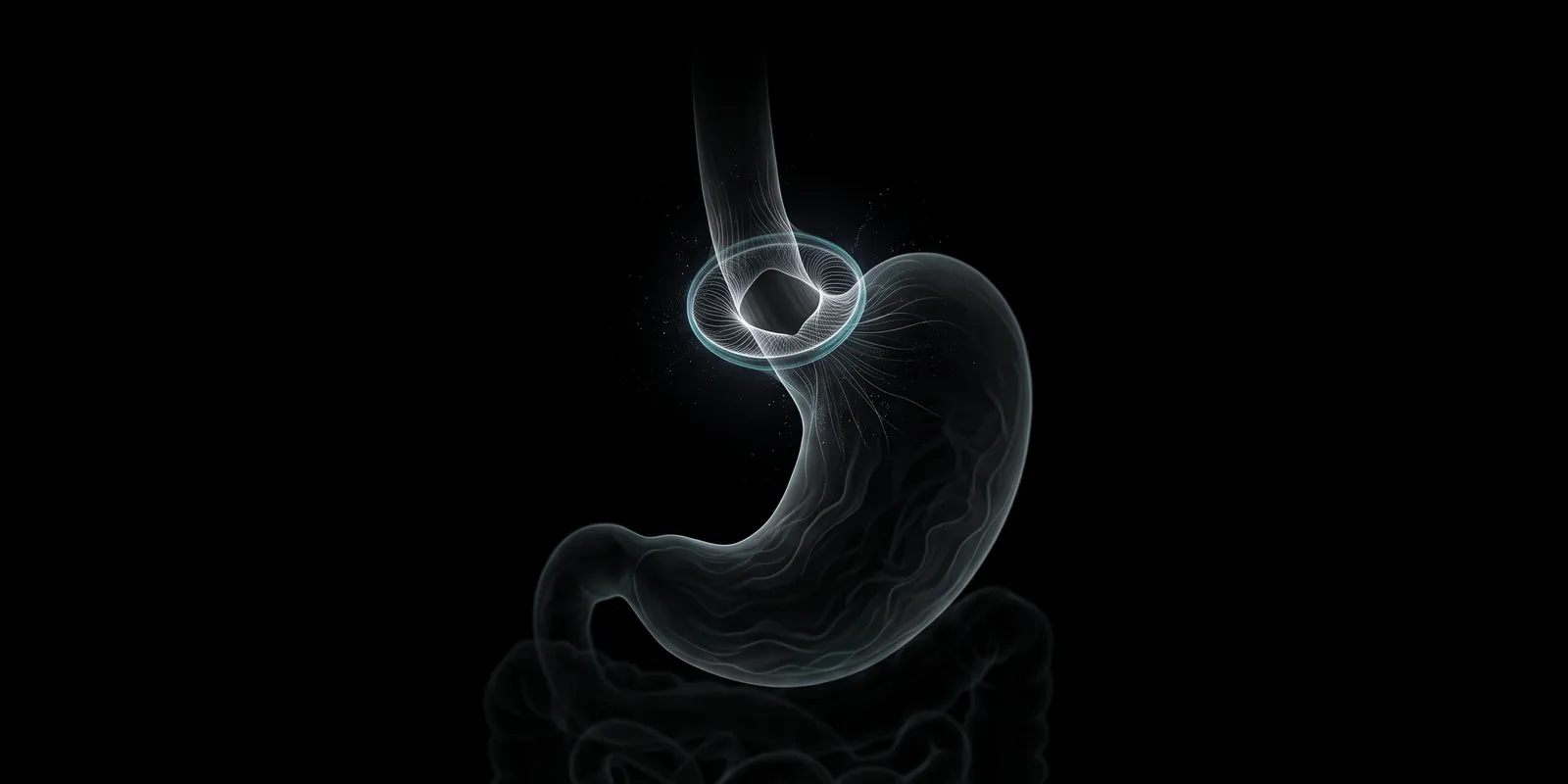
Probably, yes — but the proof comes from smokers, not vapers. Smokers have a measurably weaker valve at the top of the stomach (the lower oesophageal sphincter), and nicotine is the ingredient usually held responsible. In a monitoring study of 14 smokers with heartburn, a day of smoking raised the share of time the gullet spent acidic from 7.35 to 11.1 per cent. In a short experiment nicotine patches sped up the lower bowel, which is the likely reason nicotine can loosen stools during use and a plausible reason constipation affects about one in six people after stopping smoking. In a survey of young Texans, people who vaped nicotine reported nausea and diarrhoea about twice as often as people who had never vaped. The honest limit: studies of e-cigarettes and reflux are few, small and inconclusive, and none shows cause. Most of what follows is extrapolated from nicotine and from cigarettes.
What nicotine does to the valve above the stomach
Between the gullet and the stomach sits a ring of muscle, the lower oesophageal sphincter, that stays closed except when you swallow. Acid reflux is stomach contents getting back up through it; heartburn is how that feels. Anything that lowers the ring’s resting pressure makes reflux easier.
In smokers this is well documented. A 1990 study in the journal Gut measured resting sphincter pressure at about 9 millimetres of mercury in smokers without symptoms, against 14 in non-smokers, and counted reflux events rising from 0.6 an hour to 2.8 an hour while the smokers smoked. The authors pointed to nicotine as a likely cause of the chronically low pressure: it stays in the blood for hours after the last cigarette, and in animal experiments it lowers sphincter pressure in a dose-dependent way.
Two details matter for anyone who vapes. First, most of the reflux during smoking in that study happened when a cough or a deep breath pushed abdominal pressure past an already weak sphincter, and deep inhalation and coughing are features of vaping too. That is a plausible mechanism, not a measured one. Second, the study was of cigarettes. Nobody has yet put a pressure sensor in the gullets of a group of vapers and published a result that can be relied on.
What has actually been studied in vapers
Very little. There is no large study that follows vapers over time and measures reflux. What exists is a handful of small surveys taken at a single point in time. One of the more careful, a questionnaire study of 397 university students in Jeddah, Saudi Arabia, found that about a fifth had reflux disease on a standard scoring tool and that there was no statistically significant link with e-cigarette use. That does not clear vaping; a study of that size and design could easily miss a real effect. It does mean that anyone stating flatly that vaping causes reflux disease is ahead of the evidence.
For stomach symptoms more broadly there is one useful survey. In a survey wave of 2,389 Texans aged 17 to 24 questioned in late 2020, the 187 who vaped only nicotine reported more nausea over the previous 90 days than the 962 who had never vaped (23.1 against 11.4 per cent), more vomiting (8.6 against 3.9 per cent) and more diarrhoea (22.0 against 11.5 per cent). Abdominal pain did not differ significantly. After adjustment, nicotine vapers had about twice the odds of reporting gastrointestinal symptoms overall.
The authors say plainly that they cannot conclude vaping caused the symptoms, because the symptoms and the vaping were asked about at the same time and the questions did not tie one to the other. It is an association in young people, and it is close to the whole of the direct evidence.
Diarrhoea, constipation and the bowel
Nicotine stimulates the nerves that drive the large bowel. In an experiment on healthy non-smokers wearing nicotine patches, the time material took to pass through the colon fell from about 43 hours to between 28 and 32, depending on the dose. Most of the acceleration was in the final stretch, the rectum and sigmoid colon — the part that produces the urge to go.
That is the likely reason some people get loose stools or an urgent trip to the toilet while vaping, particularly after more nicotine than usual. Likely, because the experiment used patches, not vapes, and looked at transit time, not symptoms.
It may also explain the opposite problem after stopping. In a study of 1,067 people at a London stop-smoking clinic, constipation ratings were stable before the quit date and rose afterwards. About 17 per cent were affected — roughly one in six — and for about 9 per cent, one in eleven, it was severe. It peaked at around two weeks and was still raised at four. The usual explanation is that a bowel that has had a chemical prompt many times a day takes a while to work without it; the study did not test that. Comparable figures for diarrhoea after stopping do not exist.
Bloating and nausea
Bloating is the least studied complaint here. The usual explanation is swallowed air: the US National Institute of Diabetes and Digestive and Kidney Diseases lists smoking, alongside chewing gum and fizzy drinks, among the habits that increase the amount of air swallowed, and more swallowed air means more gas. Drawing on a vape involves the same repeated sucking and swallowing, so the mechanism is plausible. It has not been measured in vapers.
Nausea has a firmer explanation. Abdominal cramps and vomiting are recognised signs of taking in too much nicotine, along with a pounding heartbeat, headache and restlessness, and nausea is the mild end of the same picture. A cigarette ends; a vape does not, so it is easy to take more than intended. Nausea of this kind fades as the nicotine clears — its half-life is about two hours — and it is a signal about dose, not a stomach disease.
What settles after stopping, and when
The evidence is from smokers, and it is more modest than most pages suggest. The quickest change is the best documented: in the 14-smoker monitoring study, acid exposure and daytime heartburn episodes were markedly lower during 48 hours without cigarettes than on a day of smoking twenty, when heartburn episodes roughly doubled. Some of the effect, in other words, lifts within days.
Over the longer term the picture is mixed. A Japanese study followed 191 people a year after treatment with a stop-smoking medicine: reflux disease improved in 43.9 per cent of those who had quit, against 18.2 per cent of those who had not. A Norwegian population study of 29,610 adults was less encouraging. Stopping was associated with improvement in severe reflux only among people who were taking reflux medication at least weekly (odds ratio 1.78), and within that group only in those of normal weight, not in people who were overweight. Body weight drives reflux as well, and it often rises after quitting.
For the bowel: nausea from excess nicotine goes within hours. Constipation, if it comes, tends to build over the first two weeks; the clinic study did not follow people beyond four, so how long it lasts after that is not known. Fibre, fluids and movement are the standard first measures, and a pharmacist can advise on a short course of a laxative. None of these timings has been measured in people stopping vaping specifically. They are borrowed from smokers and should be read as estimates.
When to see a doctor
- Vomiting blood, or black, tarry stools — call emergency services
- Chest pain or pressure with breathlessness, sweating, or pain spreading to the arm or jaw — treat it as a possible heart problem, not heartburn
- Difficulty or pain on swallowing, or food sticking on the way down
- Heartburn on most days that is not settling, or unexplained weight loss
- Severe or persistent abdominal pain, repeated vomiting, or a swollen abdomen with no bowel movement or wind
- Stomach symptoms together with a new cough, breathlessness or fever in someone who vapes
What 336 does not do
336 does not suggest a weaker liquid or a patch as the fix for a gut irritated by nicotine; a smaller dose still acts on the same valve and the same bowel. It is cold turkey only, with no nicotine replacement sold or recommended inside it. Nor does it promise that the stomach settles on a schedule. Its 14-day hour-by-hour timeline reports what published data suggest, labelled as estimates. The first 24 hours are free, then it is a one-time purchase.
On the quit timeline
Withdrawal symptoms, hour by hour
CÂU HỎI THƯỜNG GẶP
Does vaping cause heartburn?
It plausibly does, but this has not been shown directly. Smokers have lower pressure in the valve that keeps acid in the stomach, and nicotine is thought to be the reason. In one study, smoking roughly doubled daytime heartburn episodes in people prone to it. The few surveys of vapers are small and have not found a clear link, so the claim rests on what is known about nicotine and cigarettes.
Does vaping cause diarrhoea?
It can. Nicotine speeds movement through the large bowel, mostly in its final section, which can mean looser stools or urgency. In a survey of Texans aged 17 to 24, 22 per cent of nicotine-only vapers reported diarrhoea in the previous 90 days, against 11.5 per cent of people who had never vaped. That is an association, not proof of cause. Diarrhoea that persists needs another explanation.
Does vaping cause bloating and gas?
Possibly, through swallowed air. Smoking is on the standard list of habits that increase the air a person swallows, and vaping involves the same repeated drawing and swallowing. More swallowed air means more gas and a feeling of fullness. No study has measured this in vapers, so it should be treated as a reasonable mechanism, not an established finding.
Does vaping cause constipation?
Constipation is more typical after stopping nicotine than while using it, because nicotine speeds the bowel. In a clinic study of 1,067 people who stopped smoking, about one in six became constipated and about one in eleven severely so, peaking at around two weeks. Constipation while still vaping is more likely to have another cause, such as low fluid or fibre intake or a medicine.
How do you stop stomach pain from vaping?
Nausea and cramps soon after vaping usually mean more nicotine than the body tolerates, and they fade as it clears; the half-life is about two hours. For reflux pain, a pharmacist can advise on short-term relief, but while the nicotine continues so does its effect on the valve above the stomach. Pain that is severe, persistent or unrelated to vaping needs a doctor.
How long do stomach problems last after quitting vaping?
This has not been measured in vapers. In one study of 14 smokers with reflux disease, acid exposure and heartburn were lower during a two-to-three-day break from cigarettes than on a day of smoking, while longer-term improvement in reflux disease was seen in under half of quitters at one year. Constipation after stopping peaked at about two weeks and was still present at four. These are estimates borrowed from cigarette studies, and they vary from person to person.
Sources
- Mechanisms of acid reflux associated with cigarette smoking. Gut (Kahrilas PJ, Gupta R), 1990.
- Effect of cigarette smoking on gastroesophageal reflux measured by 24-h ambulatory esophageal pH monitoring. American Journal of Gastroenterology (Kadakia SC et al.), 1995.
- Prevalence of Gastroesophageal Reflux Disease (GERD) Among Electronic Cigarette-Smoking University Students in Jeddah, Saudi Arabia. Cureus (Alturki NA et al.), 2023.
- Risk of respiratory, gastrointestinal, and constitutional health symptoms: A cross-sectional study of Texas adolescent and young adult nicotine and marijuana vapers. Preventive Medicine (Case KR et al.), 2022.
- Effect of transdermal application of nicotine on colonic transit in healthy nonsmoking volunteers. Neurogastroenterology and Motility (Rausch T et al.), 1998.
- Stopping smoking can cause constipation. Addiction (Hajek P, Gillison F, McRobbie H), 2003.
- Long-Term Benefits of Smoking Cessation on Gastroesophageal Reflux Disease and Health-Related Quality of Life. PLoS One (Kohata Y et al.), 2016.
- Tobacco smoking cessation and improved gastroesophageal reflux: a prospective population-based cohort study: the HUNT study. American Journal of Gastroenterology (Ness-Jensen E et al.), 2014.
- Symptoms & Causes of Gas in the Digestive Tract. National Institute of Diabetes and Digestive and Kidney Diseases (NIH), 2021.
- Nicotine poisoning. MedlinePlus Medical Encyclopedia (US National Library of Medicine), 2025.
More answers
Nhận hướng dẫn từng giờ, thông báo định kỳ và tư vấn audio được gửi thẳng đến điện thoại của bạn.