HOUR 48 OF 336Nerve Endings Regenerating
At hour 48 of quitting vaping — two full days — your body is completely nicotine-free. Peripheral nerve endings are regenerating. Your sense of smell and taste are already sharper. But this is also peak physical withdrawal: the clinical nadir, the hardest hours. Cessation anger — disproportionate, pharmacological rage — is a documented phenomenon at this stage. If you survive this window, the intensity starts decreasing.
WHAT'S HAPPENING IN YOUR BODY
Forty-eight hours. Your body is 100% free of nicotine. Cotinine, the primary metabolite, is in its final clearance stages. If you took a urine test right now, even cotinine levels would be approaching undetectable.
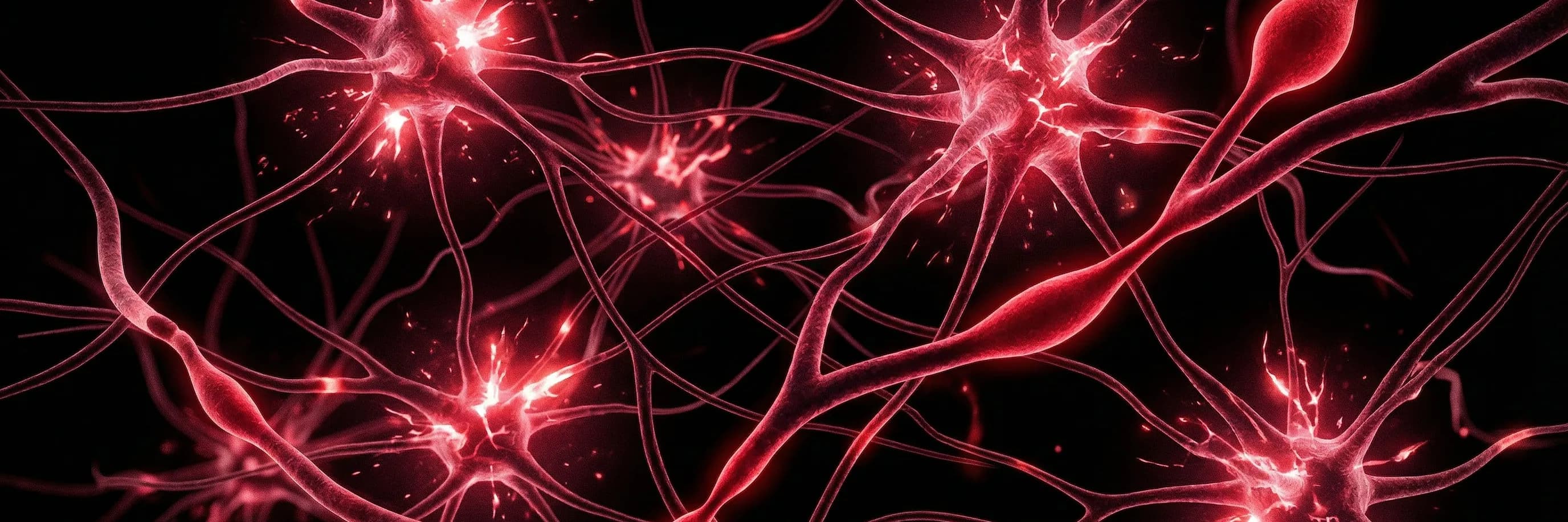
Something remarkable is happening at the cellular level: your peripheral nerve endings are regenerating. Chronic nicotine exposure damages the free nerve endings in your skin, airways, and oral cavity. At 48 hours, neurotrophin signaling has activated nerve regeneration pathways. You may already notice the effects — smells are sharper, food tastes different (sometimes startlingly so), textures feel more vivid.
Your olfactory receptor neurons, which turn over every 30-60 days, are now developing in a nicotine-free environment for the first time. The gustatory papillae on your tongue — your taste buds — are recovering from chronic exposure to heated flavoring compounds and propylene glycol. Many people who quit vaping report that their first coffee at 48 hours tastes "completely different" — richer, more complex, sometimes overwhelmingly bitter because their dampened taste buds are waking up.
For vapers specifically, the oral recovery is significant. Propylene glycol is hygroscopic — it pulls water from your oral tissues, causing chronic dehydration of the mouth and throat. Your salivary glands, suppressed during active vaping, are increasing output. Gingival blood flow is improving as nicotine-mediated vasoconstriction resolves in the delicate capillary beds of your gums.
The nAChR receptor desaturation is at or near its peak. This is the pharmacological nadir — the moment of maximum receptor emptiness before downregulation begins producing meaningful results. The withdrawal symptoms you're experiencing right now are at their clinical ceiling. It does not get worse than this.
Your bronchial tubes have continued to relax. The chronic bronchospasm maintained by nicotine's sympathomimetic effects is resolving. Measured peak expiratory flow is improving. Your lungs' cilia — microscopic cleaning hairs that were impaired by aerosol exposure — are regenerating and beginning to sweep out deposited particles.
HOW YOU'RE FEELING
This is the clinical peak of withdrawal. Hours 36-48 are consistently identified in cessation research as the most intense period, and you're in it right now.
The psychological experience at 48 hours is dominated by two forces: neurochemical distress (the objective, measurable depletion of dopamine, serotonin, and GABA in your brain) and cessation anger. Cessation anger is a documented clinical phenomenon — disproportionate, often irrational rage that surprises people who don't consider themselves angry. It's not a character flaw. It's your GABAergic and serotonergic systems in acute recalibration.
You may find yourself furious at minor provocations: a slow driver, a noisy coworker, a minor inconvenience that would normally register as nothing. The anger feels real and justified in the moment. It's not. It's withdrawal. If you can hold this meta-awareness — "I'm not actually this angry; my brain chemistry is disrupted" — you can let the wave pass without acting on it.
The craving pattern at 48 hours has shifted from the relatively gentle waves of day one to something more insistent. Cravings are now coming approximately every 30-60 minutes during waking hours, each lasting 3-5 minutes. They peak sharply and then fade. The critical insight: they always fade. Always. No craving in human history has lasted forever. You just have to not vape during the peak.
Here's the lifeline: you are at the apex. The data shows that withdrawal intensity, measured on validated scales, begins declining after hour 48-54. If you survive this window — these specific hours — you will never feel this bad from nicotine withdrawal again. The pharmacological storm is breaking.
WHAT TO DO RIGHT NOW
You are in the hardest hours. Everything here is about surviving the next 24 hours until you reach the 72-hour inflection point.
If anger hits: remove yourself immediately from any situation where it could cause damage — relationships, work interactions, driving. A 15-second isometric push against a doorframe (push as hard as you can against the frame with both hands) channels the physiological arousal through your muscles instead of through your behavior. Follow it with the 4-7-8 breath: inhale 4 seconds, hold 7, exhale 8.
Eat regular, protein-rich meals. Your blood sugar stability directly affects craving intensity. Your brain's prefrontal cortex — the executive function center that says "no" to cravings — requires glucose to function. When blood sugar dips, craving resistance drops. Don't skip meals. Almonds, eggs, cheese, lean meat — steady fuel, not sugar spikes.
Cold exposure works as a circuit breaker. Run cold water over your wrists for 30 seconds, hold an ice cube in your fist, or splash cold water on your face. The sensory shock activates your dive reflex and interrupts the craving neural pathway. It's crude but it works — cravings are short-circuit events, and any competing sensory input breaks the loop.
Physical movement is critical today. You don't need a gym session. Walk briskly for 10 minutes every few hours. Each walk triggers endorphin and GABA release that directly counteracts the neurochemical deficit. Studies measure a 25-40% craving reduction from just 5 minutes of vigorous walking.
Tonight, expect vivid dreams (REM rebound from nicotine withdrawal). This is your brain's sleep architecture recalibrating. It's temporary and it's healing. Don't fight it.
Write this down and put it where you'll see it tomorrow morning: "I am past the peak. Hour 72 is the finish line for acute withdrawal. Every hour from here gets measurably easier."
WHAT TO EXPECT THIS HOUR
As the evening progresses on day 2 of quitting vaping, withdrawal symptoms are at peak intensity — this is as hard as it gets. Your body is completely free of nicotine — all remaining symptoms are neurological adaptation, not chemical withdrawal. During the Acute Withdrawal phase (Days 1-3), your body is focused on clearing nicotine and its metabolites. The high-concentration nicotine salts from vaping are being broken down and eliminated. Each hour brings measurable progress.
BODY CHANGES
Nicotine level: 0% — completely cleared from your bloodstream. Your body achieved full nicotine clearance at hour 72.
COMMON SYMPTOMS TODAY
FREQUENTLY ASKED QUESTIONS
Is it normal to feel this way 48 hours after quitting vaping?
Yes. At hour 48 (day 2), your body is completely free of nicotine and undergoing neurological adaptation. The symptoms you're experiencing — which are at their peak intensity right now — are a documented part of nicotine withdrawal and they will pass.
How much nicotine is left in my body after 48 hours?
After 48 hours without vaping, approximately 0.0% of nicotine remains in your bloodstream. Your body is now 100% nicotine-free. All remaining symptoms are neurological, not chemical.
What's the significance of reaching 48 hours (day 2) without vaping?
Hour 48 is a major milestone. Nerve Endings Regenerating. Peripheral nerve endings damaged by chronic aerosol exposure are regenerating. Olfactory receptor neurons and gustatory papillae are recovering sensitivity, and patients typically report the first noticeable improvement in smell and taste at this milestone. Each milestone you reach dramatically increases your odds of permanent cessation — the data shows that people who reach day 2 are significantly more likely to stay quit long-term.
Get hour-by-hour guidance, push notification briefings, and audio coaching delivered to your phone.