Quitting Smoking Cold Turkey
336 hours. 14 days. Every hour tracked with clinical data.
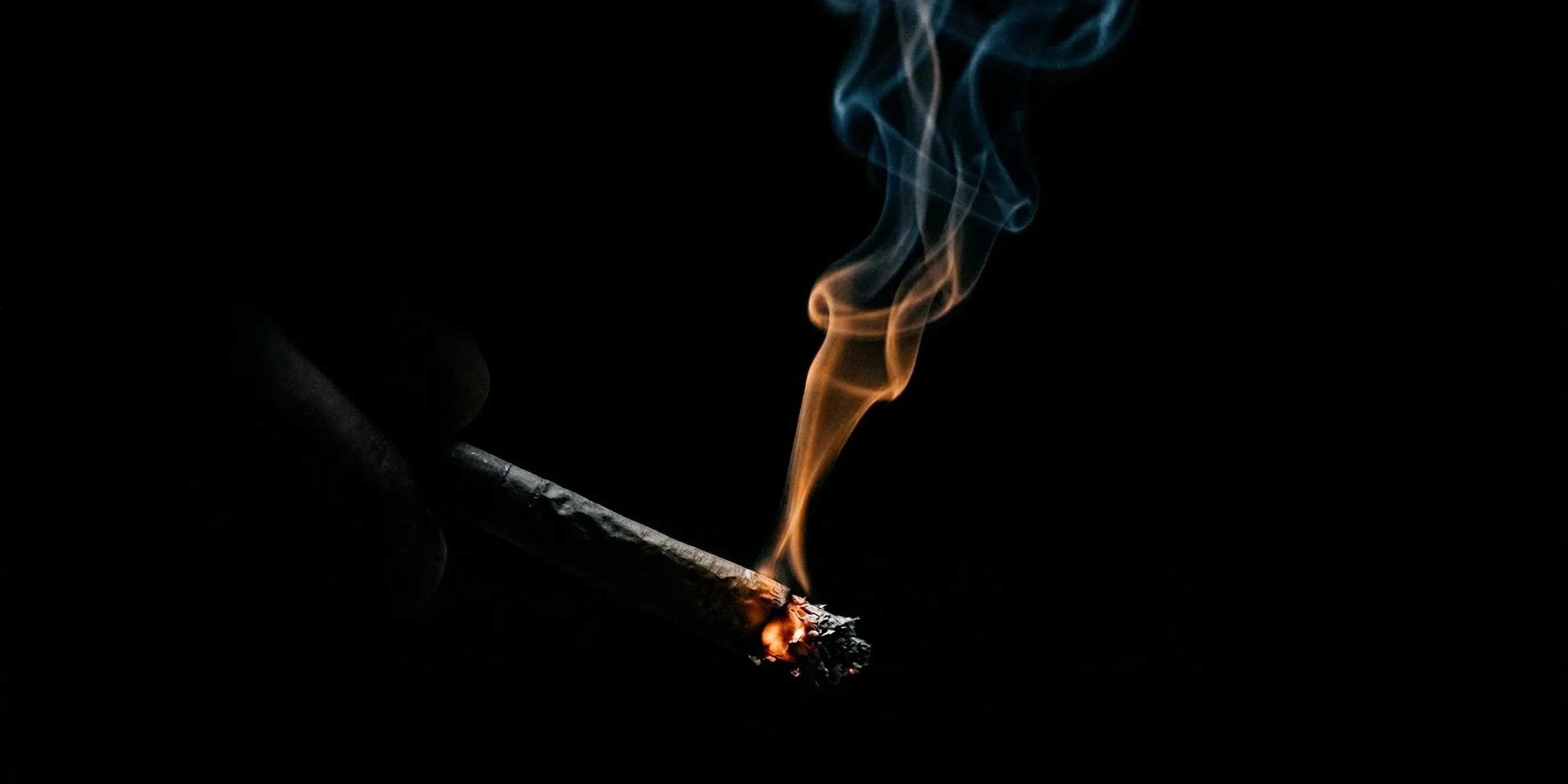
This is the most detailed guide to quitting smoking cold turkey ever published. It covers every single hour of the 14-day nicotine detox sprint — 336 hours — with clinical data about what's happening in your body, what you're likely feeling, and exactly what to do.
A typical cigarette delivers 1-2mg of nicotine to your brain within 10-20 seconds via pulmonary absorption — the fastest non-IV delivery method. But the ritual is equally addictive: the pack in your pocket, the lighter in your hand, the first inhale of the morning, the post-meal smoke, the step outside for a break. Smoking creates layered dependency — chemical, ritualistic, social, and psychological — that makes it one of the most challenging habits to break.
Cigarette smoke contains over 7,000 chemicals, at least 70 of which are known carcinogens. The nicotine hooks you. The tar, carbon monoxide, formaldehyde, benzene, and hundreds of other compounds do the damage. When you quit cold turkey, you stop all of it simultaneously — the nicotine, the carcinogens, the carbon monoxide, the ritual.
Every hour below links to a dedicated page with expanded clinical information, psychological guidance, tactical advice, and (for many hours) an audio briefing you can listen to. All of this is free. If you want hour-by-hour guidance delivered to your phone as push notifications, download the 336 app.
The clinical data on this site is based on published pharmacokinetic research, cardiovascular and pulmonary recovery studies, and cessation medicine. It is not medical advice — consult your doctor if you have underlying health conditions. But for healthy adults, cold turkey nicotine cessation is safe, effective, and supported by decades of research as the most successful method.
THE FOUR PHASES
The pharmacokinetic drop. Nicotine clears through liver metabolism while carbon monoxide releases from hemoglobin (CO clearance is unique to smokers and happens within 24 hours). Cravings peak around hours 36-48. Withdrawal symptoms — irritability, anxiety, difficulty concentrating, cessation anger — are at maximum intensity. This is the only phase where chemistry and neurology are fighting simultaneously.
View Days 1-3 →The neurological rewire. Nicotine is gone, your brain is pruning surplus receptors. Routine triggers hit hardest: morning coffee, post-meal pause, work breaks, driving, evening wind-down — every smoking ritual fires its associated neural pathway. Cravings shift from chemical urgency to habitual pull. Your lungs' cilia are regenerating and actively sweeping out years of tar. Increased coughing is healing, not damage.
View Days 4-7 →Tissue repair accelerates visibly. Most smokers report their first genuinely good day around day 8-10. Cravings drop to 1-2 per day. Sleep quality improves. Lung capacity is measurably better. Taste and smell are dramatically sharper. The morning cough is resolving. Energy returns. The identity shift from "smoker who quit" to "non-smoker" begins to feel real.
View Days 8-10 →Brain receptor density approaches non-smoker baseline. Dopamine sensitivity normalizes. The identity shift completes — you don't think about not smoking; you just don't smoke. Cardiovascular risk is already declining measurably. Lung function improvement accelerates. The 7,000+ chemicals from cigarettes haven't entered your body in two weeks. The physiological addiction is broken.
View Days 11-14 →WHY COLD TURKEY
Cold turkey is the fastest and most effective way to quit smoking. Research consistently shows that abrupt cessation leads to higher long-term success rates than gradual reduction, nicotine replacement therapy, or any other method.
The mechanism is neurological. Regular smoking causes your brain to grow surplus nicotinic acetylcholine receptors (nAChRs) to accommodate the constant nicotine supply. These surplus receptors are the physical infrastructure of addiction. When you quit, they need to be pruned back to normal density — a process called downregulation.
Cold turkey sends an unambiguous signal: nicotine is gone. Your brain begins aggressive receptor pruning immediately. Tapering keeps receptors partially activated — they never fully desaturate, so they never fully downregulate. NRT (patches, gum, lozenges) has the same problem: it replaces one nicotine source with another, maintaining the receptor upregulation that drives addiction.
For smokers, cold turkey has an additional advantage: it breaks the ritual simultaneously with the chemical addiction. Smoking is one of the most ritualized drug-delivery behaviors — every cigarette involves a multi-step sequence (reaching for the pack, extracting a cigarette, lighting it, inhaling, exhaling, ashing, disposing) that reinforces the habit loop. Tapering keeps this ritual alive on a reduced schedule. Cold turkey ends it completely.
A landmark 2016 study in the Annals of Internal Medicine (Lindson-Hawley et al.) randomized 697 smokers to abrupt cessation vs. gradual reduction. At 4 weeks, the cold turkey group had significantly higher quit rates: 49% vs. 39%. At 6 months: 22% vs. 15.5%. The epidemiological data is even more striking: approximately 65-75% of successful long-term ex-smokers quit cold turkey. It's the most common method among people who actually succeed.
Cold turkey concentrates the intense suffering into approximately 72 hours, followed by 11 days of declining difficulty. NRT spreads milder discomfort over weeks to months, then delivers a second withdrawal at the end. The total suffering is comparable; cold turkey just front-loads it, which — combined with the complete receptor reset it achieves — produces better outcomes.
Read the full science →WITHDRAWAL SYMPTOMS
BROWSE THE TIMELINE
View full 336-hour timeline →GO DEEPER
FREQUENTLY ASKED QUESTIONS
Is quitting smoking cold turkey safe?
Yes. Cold turkey nicotine cessation is safe for healthy adults. Nicotine withdrawal is uncomfortable — expect cravings, irritability, difficulty concentrating, cessation anger, and sleep disruption — but it is not medically dangerous. Symptoms peak around days 2-3 and improve steadily. The pharmacological withdrawal ends at hour 72. If you have cardiovascular conditions, COPD, or mental health conditions, consult your doctor before quitting.
How long does smoking withdrawal last?
Acute physical withdrawal (chemical clearance) lasts about 72 hours. Neurological symptoms peak around days 4-7 as your brain prunes surplus receptors. The turning point comes around days 8-10. By day 14, brain receptor density has returned to non-smoker baseline. Carbon monoxide clears within the first 24 hours. Tar clearance from lungs takes weeks to months but begins within days.
What's the success rate of quitting smoking cold turkey?
Approximately 65-75% of successful long-term ex-smokers quit cold turkey. A 2016 RCT in the Annals of Internal Medicine showed cold turkey outperforming gradual reduction at both 4-week (49% vs. 39%) and 6-month (22% vs. 15.5%) follow-ups. Getting through the first 72 hours and reaching day 7 are the two most critical thresholds.
Is smoking withdrawal worse than vaping withdrawal?
The core nicotine withdrawal is comparable. Smokers have an additional recovery track — carbon monoxide clearance and tar removal — that vapers don't. The ritual disruption may feel more acute for long-term smokers because cigarette smoking involves a more elaborate multi-step ritual. However, the timeline and receptor reset are the same: 72 hours for pharmacological clearance, 14 days for receptor baseline.
What's the best way to prepare for quitting smoking?
Throw out all cigarettes, lighters, ashtrays, and matches. Clean your environment: wash jackets, clean car interior, air out rooms (the smell of stale smoke is a powerful trigger). Stock oral substitutes: cinnamon toothpicks, strong mints, raw carrots. Modify your routines in advance: plan different morning, break, and evening activities. Tell one trusted person you're quitting.
Can I use nicotine patches while quitting cold turkey?
That's NRT, not cold turkey. We don't recommend it. Patches keep your receptors partially activated, preventing the complete downregulation that cold turkey achieves. You experience milder withdrawal for longer, then face a second withdrawal when stopping the patch. Cold turkey is harder for 72 hours but achieves faster, more complete receptor reset — which is why it has the highest long-term success rate.
How hard is it to quit smoking cold turkey?
Hard, but for a defined window — and knowing the shape of the curve changes the experience. The peak is hours 24 to 72, when nicotine reaches zero while your receptor count is still at its smoking-era maximum. After hour 72 the pharmacological withdrawal is over; by day 14 receptor density approaches a non-smoker baseline. Difficulty scales with how much you smoked, but the timeline shape is the same for everyone: every hard hour has a number, and the numbers run out.
What's the easiest way to quit smoking?
There is no easy way — but there is a simplest one. Cold turkey removes every decision except one: don't light the next cigarette. No taper schedule to negotiate with yourself, no cutting down that quietly becomes maintaining. The withdrawal is a defined 336-hour event with a known peak (hours 24-72) and a known end, and preparation — picking a quit moment, discarding cigarettes and lighters, knowing the timeline — matters more than method.
Get hour-by-hour guidance, push notification briefings, and audio coaching delivered to your phone.