336

戒吸烟后的Anxiety & Restlessness

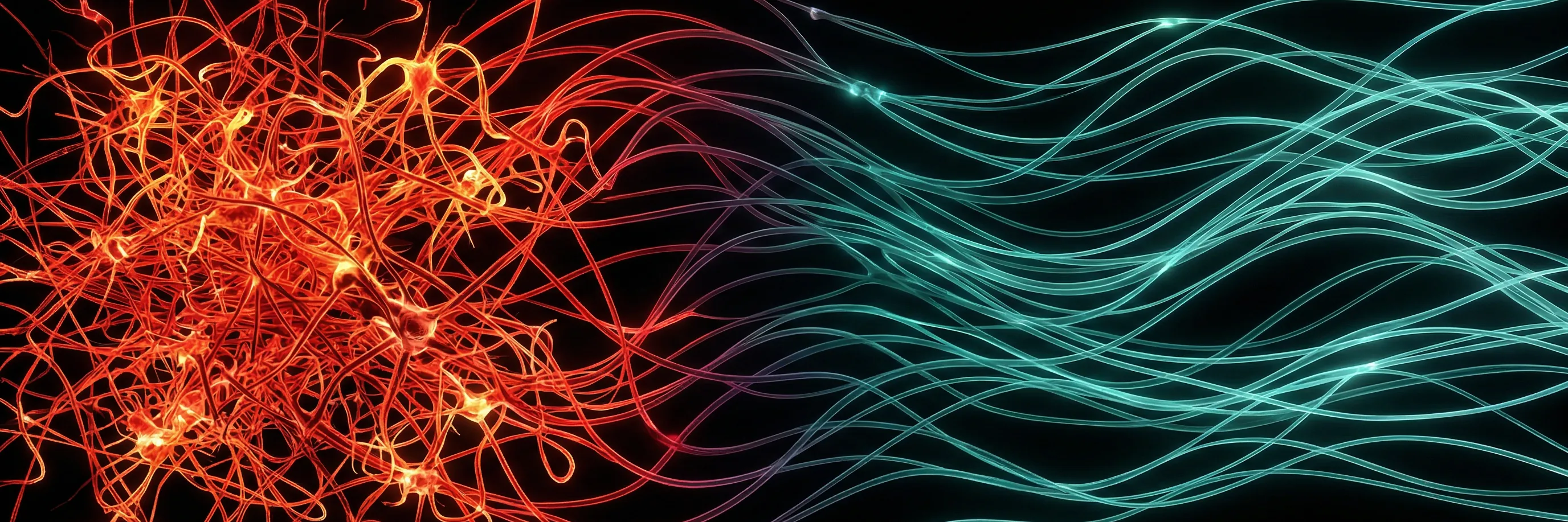
Clinical visualization of anxiety & restlessness during smoking withdrawal

Anxiety after quitting smoking begins within hours and peaks during days 1-3. The anxiety is pharmacological — cortisol elevation, GABA disruption, and dopamine deficit — not a sign of weakness. For smokers, anxiety is compounded by the loss of the 'smoke break' coping ritual. Withdrawal anxiety decreases substantially by day 7 and resolves by day 14.

The cruelest aspect of smoking-related anxiety: nicotine withdrawal causes anxiety, and the thing that would instantly relieve it is a cigarette. But the 'relief' is an illusion — nicotine caused the anxiety in the first place by creating a withdrawal cycle. Non-smokers don't experience this.

开始时间

Within 2-4 hours of your last cigarette as receptor activation drops.

高峰时间

Days 1-3, with the worst episodes between hours 24-72.

缓解时间

Decreases substantially by day 5-7, resolves by day 14. If you had pre-existing anxiety, it returns to your pre-smoking baseline.

发生原因

Cortisol elevation (stress hormone), GABA disruption (reduced calming signals), and dopamine deficit (background unease). For smokers, there's an additional layer: losing the 'smoke break' ritual that served as a stress management tool removes a coping mechanism without an immediate replacement.

应对措施

4-7-8 breathing for acute episodes. Exercise for sustained anxiety reduction. Limit caffeine. Grounding techniques (5 things you see, 4 you touch, etc.). Replace the smoke break with a walk break — keep the break, change the activity. Talk to someone when anxiety peaks.

出现此症状的小时

H2First Half-Life Reached: Nicotine's plasma half-life of approximately 2 hours means roughly 50% of circulating nicotine has now been metabolized by hepatic CYP2A6 enzymes into cotinine.H3Peripheral Vasoconstriction Easing: With declining nicotine levels, norepinephrine release from adrenal medulla decreases, allowing peripheral blood vessels to begin dilating.H4Blood Pressure Normalization Initiates: Systolic blood pressure begins declining toward the patient's non-smoking baseline as sympathetic nervous system stimulation from nicotine wanes.H6Resting Heart Rate Declining: Heart rate drops 5-10 beats per minute from the smoker's elevated baseline as nicotine-mediated sympathetic stimulation of the sinoatrial node diminishes.H8Carbon Monoxide Halved: Carboxyhemoglobin levels have dropped by approximately 50%.H9Platelet Aggregation Reducing: With nicotine levels now below 5% of peak, platelet adhesiveness begins decreasing.H16Sleep Architecture Disruption Begins: If approaching a sleep cycle, REM sleep will be disrupted.H17Gastric Motility Shifting: Nicotine's prokinetic effect on the gastrointestinal tract is fading.H23White Blood Cell Count Stabilizing: The chronic leukocytosis seen in smokers, with WBC counts 20-30% above non-smoker norms, begins trending downward.H24Full Day Nicotine-Free Achieved: At 24 hours, endothelial function shows measurable improvement.H26Cardiac Output Normalizing: Cardiac output is adjusting to the absence of nicotine-driven sympathetic stimulation.H46Catecholamine Homeostasis Resetting: The chronic elevation of circulating catecholamines driven by nicotine's action on sympathetic ganglia is resolving.H54Pancreatic Beta Cell Recovery: Pancreatic beta cells, whose insulin secretory response was blunted by nicotine's direct toxic effects, are recovering function.H59Interleukin-6 Levels Reducing: Serum interleukin-6, a pro-inflammatory cytokine chronically elevated in smokers, is measurably declining.H61Mucosal Immunoglobulin A Recovering: Secretory IgA levels in saliva and bronchial secretions, reduced by chronic smoke exposure, are beginning to recover.H63Oral Mucosal Healing Progressing: The oral mucosa, chronically exposed to smoke carcinogens and heat, is undergoing rapid epithelial turnover.H69Serotonergic Tone Stabilizing: Serotonin synthesis and receptor sensitivity in the dorsal raphe nucleus are stabilizing as nicotine's modulatory effect on tryptophan hydroxylase resolves.H73Receptor Pruning Accelerates: With nicotine fully cleared, proteolytic enzymes are actively degrading surplus nicotinic acetylcholine receptors (nAChRs) on neuronal surfaces.H77Cortisol Remains Elevated: Salivary cortisol levels remain 15-25% above baseline as the hypothalamic-pituitary-adrenal (HPA) axis continues recalibrating.H78GABA Signaling Recalibrating: The GABA/glutamate balance is shifting back toward homeostasis.

常见问题解答

Is anxiety normal after quitting?

Completely normal. It's one of the most studied withdrawal symptoms. It's pharmacological (cortisol, GABA, dopamine) and resolves as your brain recalibrates.

Did smoking help my anxiety?

No. Smoking created a withdrawal-relief cycle that felt like stress management but actually maintained chronic low-level anxiety between cigarettes. After the 14-day withdrawal, your baseline anxiety will likely be lower than during active smoking.

How long does anxiety last?

Peaks days 1-3, decreases by day 5-7, resolves by day 14. If anxiety persists significantly, consult a doctor.

下载336

获取逐时指导、推送通知简报和手机音频教练服务。

APP STORE — 即将发布GOOGLE PLAY — 即将发布
Anxiety & Restlessness After Quitting Smoking: Hour-by-Hour Timeline | 336