Does vaping make you break out?
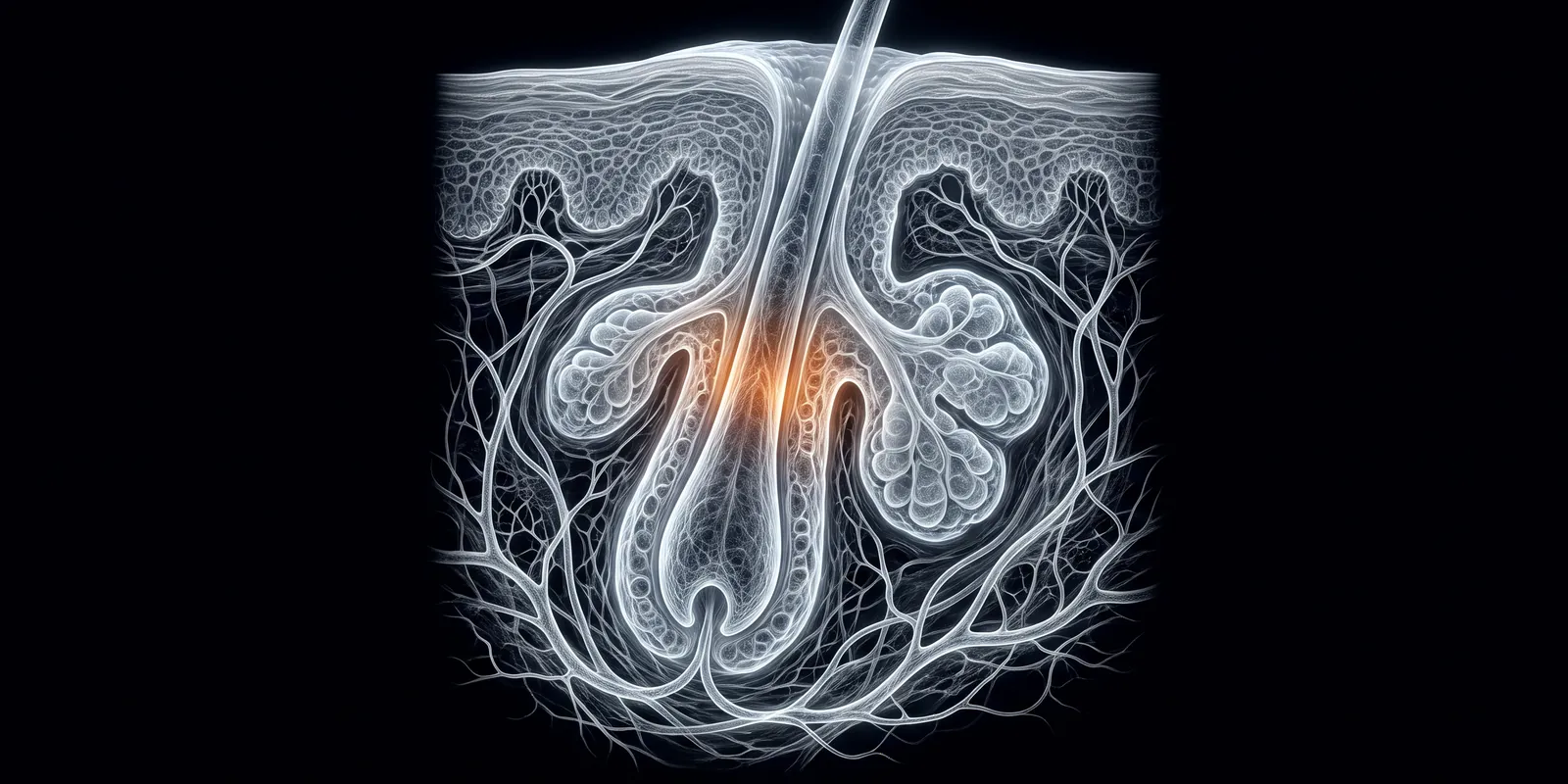
Nobody has shown that vaping causes acne, and no published study located for this article has measured acne in people who vape. The nearest evidence is from smokers, and it conflicts: a 2021 pooled analysis of 17 studies found no significant overall link between smoking and acne (odds ratio 1.21, 95% confidence interval 0.93 to 1.57), with individual studies ranging from twice the odds of acne in smokers to far less severe acne in heavy smokers. One pattern, blocked pores and blackheads without much inflammation in adult women, has been tied to smoking. What is established is narrower. Nicotine vaping measurably impairs the small blood vessels of the skin in the hour after a session, and e-cigarettes have caused contact rashes on the hands and around the mouth that can pass for a breakout. The popular chain from nicotine to stress hormones to oilier skin is plausible and untested. If your skin worsened after you started vaping, stopping is a reasonable experiment, not a guaranteed cure.
What studies of smoking and acne show
The question has been asked about cigarettes for decades, and the answers disagree. In a study that examined 896 residents of Hamburg, 40.8 per cent of active smokers had acne against 25.2 per cent of non-smokers, about twice the odds, and both the frequency and the severity of acne rose with the number of cigarettes smoked each day. A study of young men pointed the other way: those smoking 20 to 30 cigarettes a day had about one-fifth the odds of severe acne. Several large surveys have likewise found lower odds of acne among tobacco users. A 2020 systematic review of acne epidemiology described the smoking results as inconsistent between studies.
Pooling does not settle it. A 2021 meta-analysis of 17 observational studies put the odds ratio for smoking and acne at 1.21, with a confidence interval of 0.93 to 1.57 that includes no effect. Split by age, adults showed an association (1.43, 1.10 to 1.87) and adolescents did not (1.04, 0.79 to 1.38). Every study was cross-sectional or case-control, so none can separate smoking from the stress, hormones, diet and skin habits that travel with it.
The most specific finding concerns adult women. Italian researchers who examined 1,046 women aged 25 to 50 found that the commonest form of adult acne was not the inflamed kind but a comedonal one, made of blocked pores, blackheads and small bumps, and that it was strongly associated with smoking. In a subgroup of 60, the skin oil of smokers with acne was more oxidised and lower in vitamin E. The authors proposed calling the severe form smoker’s acne. Their explanation involves cigarette smoke oxidising skin oil, which is a reason not to assume that the finding carries over to vapour.
What is known about vapers specifically
Very little. A 2024 systematic review of e-cigarettes in dermatology found 11 reports that met its criteria: contact dermatitis, burns from devices, a few rare conditions and one review of wound healing. Acne appears in it only as something linked to conventional cigarettes. The claim that vaping causes acne therefore rests on analogy with smoking, and the smoking evidence is itself divided.
What has been documented in vapers is contact dermatitis, which is skin inflammation caused by something touching it. Several case reports trace itchy, red, scaly patches on the dominant hand, and sometimes on the lips or face, to nickel released by the device in people with a nickel allergy; those rashes cleared once the device was dropped. One report describes an itchy, eczema-like rash around the mouth attributed to flavoured liquid. The review names propylene glycol and fragrances as the likeliest allergens in e-liquid, on the strength of that single case.
These are rare reports, not a common outcome, but they matter here because a red, bumpy rash around the mouth is easily taken for a breakout. A rash that itches or scales, has no blackheads, and sits where the device or the vapour touches is worth showing to a doctor before treating it as acne. Acne products can irritate it further.
Nicotine, skin blood flow and healing
Nicotine’s effect on the skin’s small vessels has been measured in vapers. In a randomised crossover trial of 25 healthy occasional smokers, the skin’s small-vessel response to a standard test was clearly reduced an hour after vaping with nicotine, and unchanged after the same vapour without nicotine. The authors attributed the effect to nicotine alone. It was a small, single-session experiment, and it did not look at spots.
It is often said that nicotine slows wound healing, and that this is why blemishes linger. The evidence is narrower than that. Smoking certainly impairs healing: a systematic review of 177 studies found that it lowers oxygen in the tissue and blunts the inflammatory and repair cells that close a wound. The same review concluded that nicotine by itself does not affect the tissue environment, and that the effect of nicotine replacement on healing appears marginal. Whether a blemish heals more slowly in someone who vapes has not been measured.
The cortisol and oil theory
The usual explanation runs: nicotine raises cortisol, cortisol increases oil, oil causes spots. The first link has support. Smoking a high-nicotine cigarette acutely raises cortisol, a stress hormone, and smokers in one laboratory study had higher resting cortisol than non-smokers. Stress is also associated with acne: in the epidemiological review above, one study of adult women found that those reporting very high stress had about three times the odds of acne of those reporting mild stress, and two studies of school pupils found that stress tracked severity.
The links in between are missing. No study found for this article measured the skin’s oil output after vaping, or showed that nicotine’s effect on cortisol is large enough to produce a spot. If the chain were strong, studies of smokers, who take in the same drug, should agree with one another, and they do not. The honest label is plausible and untested.
One other common claim could not be supported at all: that exhaled propylene glycol dries the face and makes it produce more oil. No study located for this article measured that.
If you stop: will your skin clear up?
No study has followed anyone’s skin after they stopped vaping, so there is no measured timeline. The blood-vessel effect was measured an hour after a single session, so how long it lasts in a daily vaper is unknown. In smokers, tissue oxygen recovers rapidly once smoking stops, and inflammatory cell function recovers in part within about four weeks. Acne itself moves slowly. Dermatologists advise giving any acne treatment at least four weeks before judging it, and say clearing can take two to three months or longer. A fair test of stopping is therefore measured in months.
Breakouts after quitting are widely reported and have not been studied. Acne is not on the list of recognised nicotine withdrawal symptoms. What is on it are anxiety, irritability and insomnia, which peak within the first week and last two to four weeks, and stress is associated with acne. A flare in the first weeks is plausible on those grounds, and there is no evidence for a purge of toxins through the skin. A contact rash caused by the device should settle once the device is gone.
What to do in the meantime
The standard advice does not depend on the cause. The American Academy of Dermatology recommends washing the face on waking, before bed and after sweating, and no more often, because washing more than twice a day can irritate skin and worsen acne. It advises against scrubbing, recommends products labelled non-comedogenic, and warns that touching, picking or squeezing makes acne worse.
See a doctor or dermatologist for cysts or deep nodules, for scarring, or for acne that has not responded to over-the-counter treatment. Vaping may be contributing without being the cause, and treatable conditions get missed when everything is attributed to one habit.
When to see a doctor
- Deep, painful cysts or nodules, or acne that is leaving scars — this needs medical treatment, not skincare
- An itchy, scaly or blistering rash on the hands, lips or around the mouth — possible contact dermatitis, not acne
- A sudden severe flare with fever or feeling unwell — seek prompt medical advice
- Swelling of the lips or face, or difficulty breathing, after using any product — call emergency services
- Acne that has not improved after two to three months of consistent treatment — see a doctor or dermatologist
What 336 does not do
This is not a skincare page with an affiliate list at the bottom, and 336 will not promise that fourteen days without nicotine clears anyone’s skin, because nobody has measured that. The app is cold turkey only, with no nicotine replacement sold or recommended inside it: a 14-day, hour-by-hour timeline that is free for the first 24 hours and then a one-time purchase, not a subscription. What it tracks is nicotine leaving the body. The skin belongs to a dermatologist.
On the quit timeline
Withdrawal symptoms, hour by hour
よくある質問
Does vaping cause acne?
It has not been shown to. No published study located for this article has measured acne in people who vape, and a 2024 review of e-cigarettes and skin found reports of contact dermatitis and burns, not acne. The idea rests on studies of smokers, which conflict: a pooled analysis of 17 found no significant overall link (odds ratio 1.21, 95% confidence interval 0.93 to 1.57).
Does nicotine cause acne?
Not proven. Nicotine reduces the function of the skin’s small blood vessels after a vaping session and can raise cortisol, and stress is associated with acne, but no study has shown that nicotine increases skin oil or produces spots. Studies of smokers disagree, with some finding more acne and some less. The clearest association, a non-inflamed form in adult women, has been attributed to smoke oxidising skin oil.
Will my skin clear up if I stop vaping?
Possibly, but nobody has studied it. No research has followed skin after stopping vaping. If a rash was a contact reaction to the device or liquid, it should settle once exposure ends. For ordinary acne, dermatologists advise allowing at least four weeks before judging any change, and two to three months or longer for clearing, so give it months before deciding.
Why am I breaking out after quitting vaping?
It is commonly reported and has not been studied. Acne is not a recognised nicotine withdrawal symptom, but anxiety, irritability and insomnia are; they peak in the first week and last two to four weeks, and stress is associated with acne. There is no evidence of toxins purging through the skin. See a doctor if it is severe or persists.
Can vaping cause a rash around the mouth?
Rarely, yes. Case reports describe contact dermatitis in vapers: itchy, red, scaly patches on the hand that holds the device, and sometimes on the lips or face, usually traced to nickel in people with a nickel allergy, and one eczema-like rash around the mouth attributed to flavoured liquid. These can be mistaken for acne. The nickel cases cleared after the device was stopped.
Do nicotine-free vapes make you break out?
There is no evidence either way for acne. In one crossover trial, vapour without nicotine did not produce the change in skin blood vessel function seen with nicotine. Removing nicotine does not remove the liquid or the device, though: the contact rashes reported in vapers were traced to nickel from the device and, in one case, to flavoured liquid.
Sources
- Epidemiology of acne in the general population: the risk of smoking. British Journal of Dermatology (Schäfer et al.), 2001.
- Association between acne and smoking: systematic review and meta-analysis of observational studies. Chinese Medical Journal (Zhang et al.), 2021.
- Systematic review of the epidemiology of acne vulgaris. Scientific Reports (Heng and Chew), 2020.
- Acne and smoking. Dermato-Endocrinology (Capitanio et al.), 2009.
- Electronic cigarettes in dermatology: a systematic review of the literature. Advances in Dermatology and Allergology (Rutecka et al.), 2024.
- Differential Effects of E-Cigarette on Microvascular Endothelial Function, Arterial Stiffness and Oxidative Stress: A Randomized Crossover Trial. Scientific Reports (Chaumont et al.), 2018.
- Effects of abstinence from tobacco: valid symptoms and time course. Nicotine & Tobacco Research (Hughes JR), 2007.
- Wound healing and infection in surgery: the pathophysiological impact of smoking, smoking cessation, and nicotine replacement therapy: a systematic review. Annals of Surgery (Sørensen LT), 2012.
- Hormonal, cardiovascular, and subjective responses to acute stress in smokers. Psychopharmacology (Childs and de Wit), 2009.
- 9 things to try when acne won’t clear. American Academy of Dermatology, 2023.
More answers
時間ごとのガイダンス、プッシュ通知ブリーフィング、音声コーチングをお使いのスマートフォンでお届けします。