STUNDE 336 VON 336336 Stunden geschafft
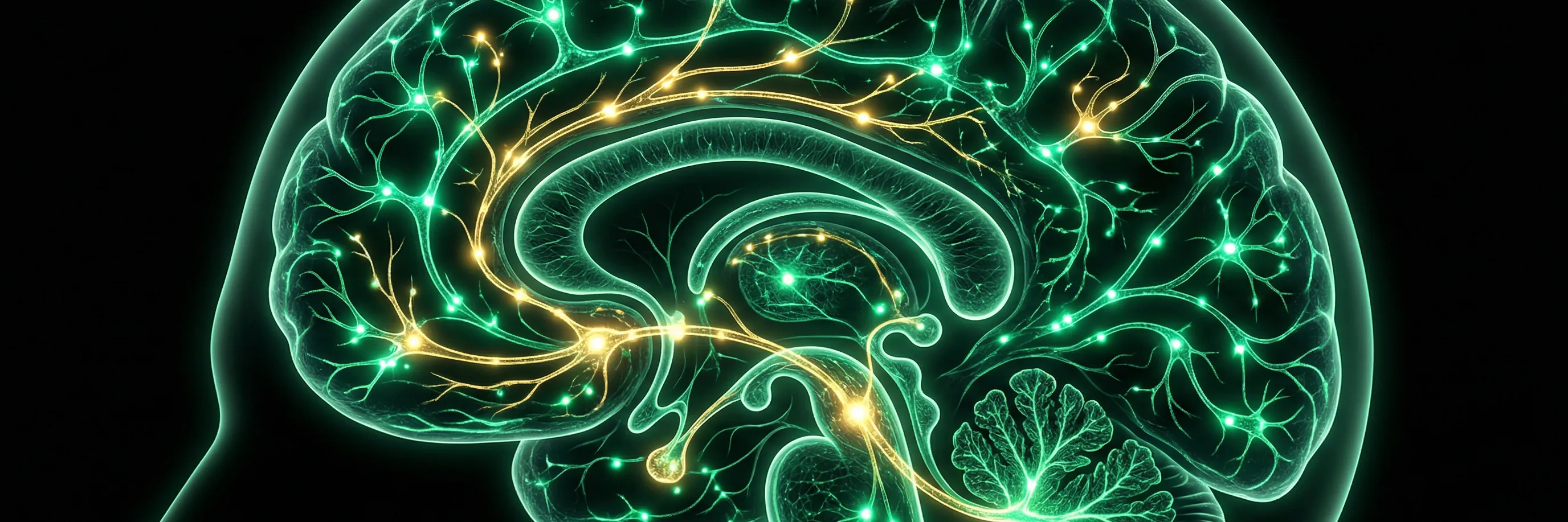
In Stunde 336 des Rauchstopps (Tag 14) ist die Dichte der nikotinergen Acetylcholin-Rezeptoren in Ihrem Gehirn auf den Nichtraucher-Ausgangswert zurückgekehrt. Die physiologische Sucht ist gebrochen. Kohlenmonoxid fehlt seit Tag eins, Ihre Zilien räumen Teer ab, und Geschmack und Geruch sind zurück. Zwei Wochen, keine Zigaretten, und die Rezeptorarchitektur, die Ihr Rauchen aufgebaut hat, ist abgebaut. Sie sind kein Ex-Raucher, der eine Gewohnheit verwaltet. Sie sind ein Mensch, der nicht raucht. Der Sprint ist abgeschlossen.
WAS IN IHREM KÖRPER PASSIERT
Three hundred and thirty-six hours. Fourteen days. Two weeks without a cigarette. The sprint is complete.
Your brain's nicotinic acetylcholine receptor density has returned to non-smoker baseline. The surplus receptors that years of smoking built — the neurological infrastructure of your addiction — have been pruned. This is measurable neuroanatomy, not a metaphor. Your brain's receptor architecture now resembles that of someone who never smoked.
The comprehensive recovery inventory for 14 days of smoking cessation:
Neurological: nAChR receptor density at non-smoker baseline. Dopamine synthesis independent and normalized. Serotonin and GABA signaling restored. Prefrontal cortex function fully operational. Cholinergic system self-sufficient. The neurological addiction is broken.
Cardiovascular: This is where smokers see the most clinically significant gains. Carbon monoxide cleared completely within the first day. Resting heart rate normalized (down 10-20 bpm). Blood pressure at pre-smoking baseline. Heart rate variability improved — a key marker of autonomic health. Endothelial function restored. Platelet aggregation normalized. Fibrinogen levels declining. Arterial elasticity improving. Your excess risk of coronary heart disease — which was 2-4 times that of a non-smoker — has already begun its decline. By month 3, the improvement is substantial. By year 1, your excess risk is cut in half. By year 5-15, it approaches non-smoker levels.
Respiratory: Your lungs have made remarkable progress in 14 days. Cilia are regenerated and actively sweeping tar deposits from your airways. Bronchial inflammation has decreased. FEV1 is measurably improved. The chronic cough, if present, is resolving as the backlog of debris is cleared. Lung function will continue improving for months — at 3 months, FEV1 improvement becomes dramatic; at 9 months, most residual coughing and shortness of breath resolve.
Oral: Taste buds fully regenerated on their natural 10-14 day cycle. Salivary function normalized. Gingival blood flow restored — your gums are receiving the nutrients and oxygen they were denied during smoking. The staining on your teeth has stopped progressing. Your oral microbiome is shifting toward the healthy profile of a non-smoker.
Immune: Full immune function restored. White blood cell counts normalized. Inflammatory markers decreased across the board. DNA repair mechanisms, freed from the constant onslaught of carcinogenic compounds, are addressing accumulated damage. Your body's cancer surveillance is operating at non-smoker levels.
The 7,000+ chemicals in cigarette smoke — the tar, the carbon monoxide, the benzene, the formaldehyde, the polonium-210, the N-nitrosamines — have not entered your body in 14 days. Every repair process in your body has been running at full capacity, undivided, for two straight weeks.
WIE SIE SICH FÜHLEN
You are a non-smoker.
Not "a smoker who quit." Not "an ex-smoker trying to stay clean." A non-smoker. The identity shift that started tentatively at hour 72, that strengthened through week one, is now your operating default. When someone offers a cigarette, your response is automatic: "I don't smoke." No internal debate. No negotiation. Statement of fact.
This is what 336 hours of neural rewriting produces. Every trigger you faced — every morning coffee, every work break, every post-meal moment, every stressful phone call, every social gathering — you responded without a cigarette. Each response weakened the smoking pathway and strengthened the non-smoking one. After 336 hours and hundreds of trigger events, the non-smoking pathway is dominant.
For long-term smokers, there may be a moment of quiet disbelief: "I actually did it." The person who smoked a pack a day for 10, 20, 30 years — that person and you are the same person, but the relationship with cigarettes is over. Like any long relationship that ends, there may be moments of nostalgia. A stress trigger that your brain briefly suggests a cigarette for. The smell of smoke on a warm evening. These are memories, not cravings. They have no pharmacological power. Let them surface, acknowledge them, and let them go.
The freedom you feel now — or the quiet normalcy that passes for freedom — is what non-smokers feel all the time. They don't think about not smoking. They just don't smoke. That's your baseline now.
WAS JETZT ZU TUN IST
The sprint is complete. Here's how to protect everything you've built.
Milestones ahead: Day 30, Day 90, Day 365. At 30 days, lung function improvement accelerates. At 90 days, cilia have substantially cleared the tar backlog and relapse risk drops below 5%. At 1 year, your excess coronary heart disease risk is halved. At 5 years, your stroke risk equals that of a non-smoker. At 10-15 years, your lung cancer risk approaches (though may never fully reach) non-smoker levels.
The three relapse danger zones in months 1-3:
1. Alcohol. It lowers inhibition and often occurs in social settings where others smoke. The combination is the #1 relapse trigger. Before your next social drinking occasion: set a limit, tell your companion you don't smoke, have an exit plan.
2. Major life stress. Job loss, breakup, bereavement, financial crisis — these activate the cortisol pathways that smoking once modulated. You need a pre-planned response for "the worst day": call your support person, exercise hard, use the 4-7-8 breathing technique. The crisis will pass. Smoking won't help the crisis — it will add addiction back on top of it.
3. Nostalgia. Your brain will romanticize smoking. It will remember the pleasant first drag, the social bonding, the stress relief — while conveniently forgetting the coughing, the expense, the smell, the health damage, the 72 hours of hell you just went through. One cigarette re-sensitizes receptors within minutes. There is no "just one."
What you've accomplished in 336 hours: cleared nicotine, cleared carbon monoxide, normalized blood pressure and heart rate, restored oxygen transport, begun arterial healing, regenerated nerve endings and taste buds, reactivated lung cilia, normalized receptor density, restored dopamine independence, rebuilt sleep architecture, and established a non-smoking identity.
That's what you're protecting. It's worth protecting.
The sprint is over. Go live as a non-smoker.
WAS IN DIESER STUNDE ZU ERWARTEN IST
Mit fortschreitendem Abend an Tag 14 des Rauchstopps ist diese Stunde ein Meilenstein, kein Symptom. Ihr Körper ist vollständig nikotinfrei — alle verbleibenden Symptome sind neurologische Anpassung, kein chemischer Entzug. Sie haben das Ende der Phase des neuen Grundniveaus (Tage 11-14) erreicht. Rechnen Sie damit, dass sich das Ziel leiser anfühlt als erwartet; der laute Teil waren die Tage eins bis drei. Von hier an ändert die Arbeit ihre Form: kein Countdown mehr, nur noch das gewöhnliche Geschäft, jemand zu sein, der nicht raucht — an denselben Orten, an denen Sie es früher taten.
KÖRPERLICHE VERÄNDERUNGEN
Nicotine level: 0% — completely cleared from your bloodstream. Your body achieved full nicotine clearance at hour 72.
Your lung cilia — the tiny hair-like structures that were paralyzed by cigarette smoke — are regenerating and beginning to sweep accumulated tar and debris out of your airways. This is why you may be coughing more: it's a sign of healing, not damage.
HÄUFIGE SYMPTOME HEUTE
HÄUFIG GESTELLTE FRAGEN
Ist es normal, sich 336 Stunden nach dem Rauchstopp so zu fühlen?
Ja. In Stunde 336 (Tag 14) ist Ihr Körper vollständig nikotinfrei, und die Rezeptordichte ist auf den Nichtraucher-Ausgangswert zurückgekehrt. Sich am Ziel nüchtern zu fühlen, ist normal — das körperliche Drama endete in den ersten zweiundsiebzig Stunden. Verlangen ist jetzt selten, auslöserbasiert und nach drei bis fünf Minuten vorbei.
Welche Bedeutung hat es, 336 Stunden (Tag 14) ohne Rauchen zu erreichen?
Stunde 336 schließt den Sprint ab. Die Rezeptordichte im Gehirn ist auf den Nichtraucher-Ausgangswert zurückgekehrt, und die chemische Abhängigkeit von Zigaretten ist beendet. Tag 14 zu erreichen verbessert Ihre Chancen erheblich, dauerhaft aufgehört zu bleiben — aber es klärt die Chemie, nicht die Gewohnheit.
Und jetzt — wie bleibe ich dauerhaft von Zigaretten weg?
Ehrlich: Die späten Fallen sind Alkohol, akuter Stress, andere Raucher und Nostalgie für das Ritual — dazu der Gedanke „nur eine, ich habe ja bewiesen, dass ich aufhören kann“, an dem die meisten abgeschlossenen Rauchstopps scheitern. Halten Sie keine Zigaretten in Haus oder Auto, halten Sie den Satz „Ich rauche nicht“ im Präsens, und planen Sie neu für die erste Hochzeit, lange Autofahrt oder schlechte Woche, die Ihnen begegnet. Währenddessen zahlt Ihr Körper weiter: die Lunge klärt sich über den ersten Monat, die Lungenfunktion ist nach drei Monaten deutlich besser, und das überschüssige Herzkrankheitsrisiko ist nach einem Jahr etwa halbiert.
Erhalten Sie stündliche Anleitung, Push-Benachrichtigungs-Briefings und Audio-Coaching direkt auf Ihr Telefon.